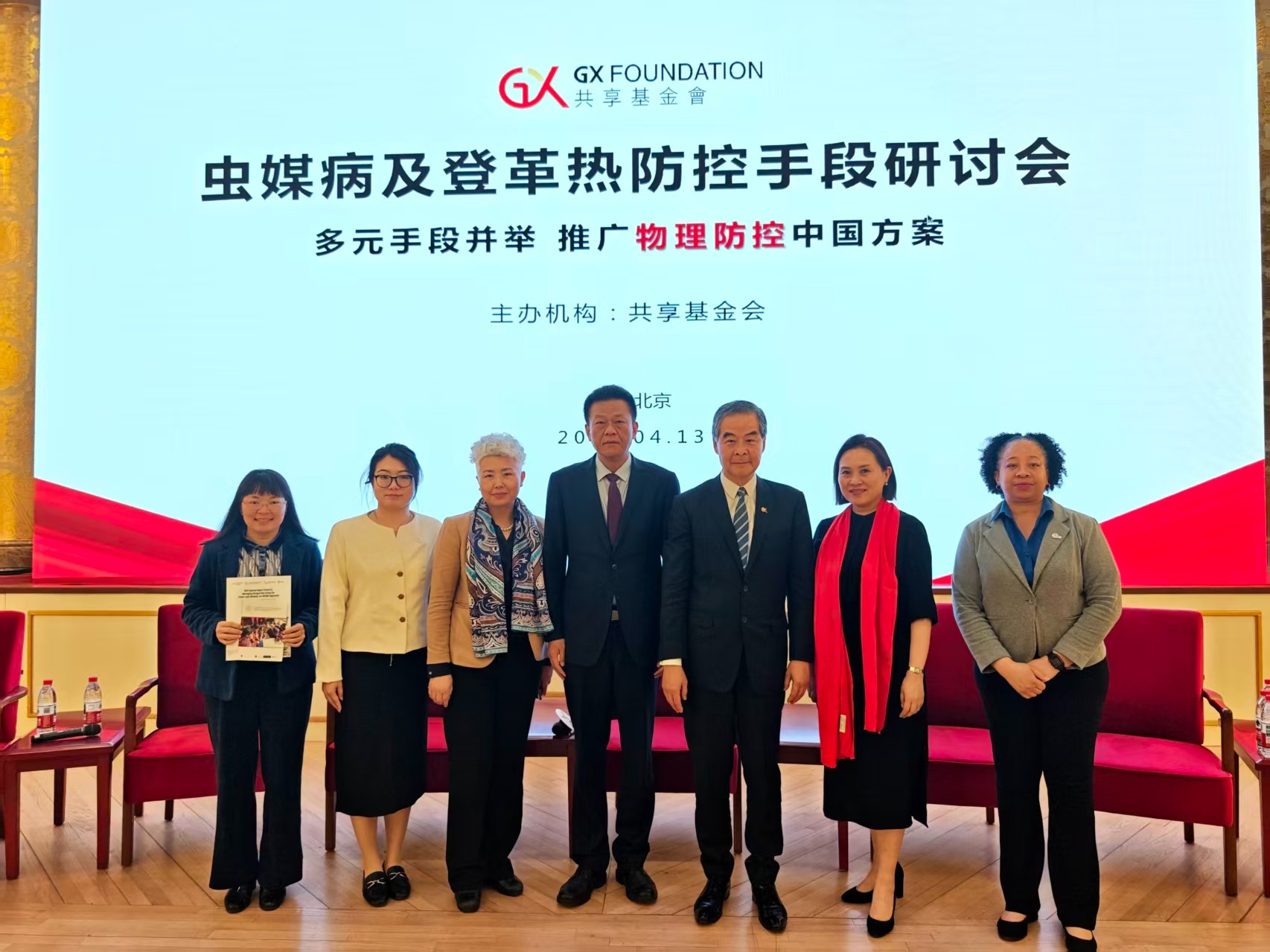
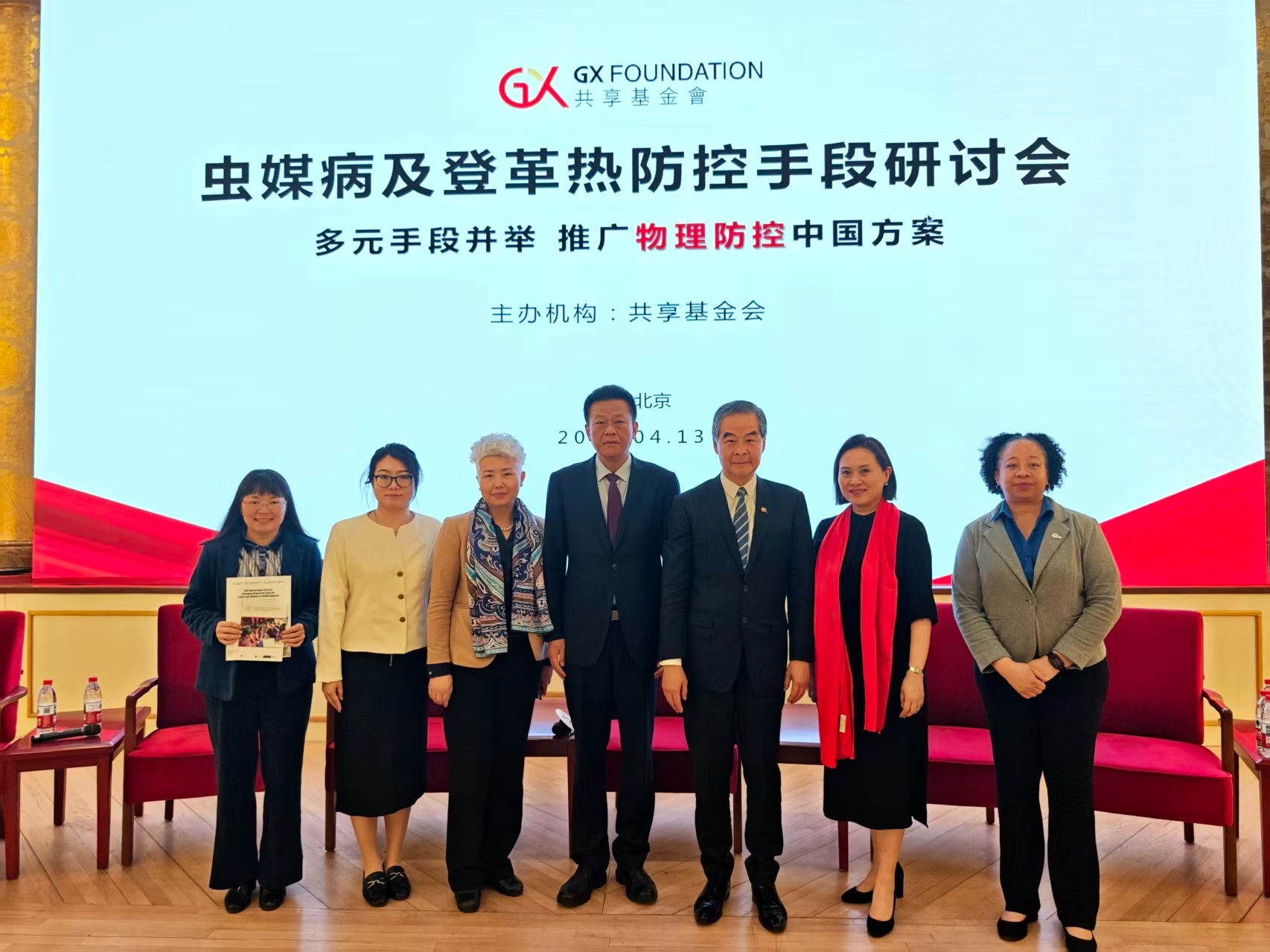
On 13 April 2026, IRDR participated in the "Symposium on Vector-Borne Diseases and Dengue Fever Control Strategies," held at the Beijing Friendship Hotel in Beijing, China. The event was organised by the GX Foundation in partnership with several organisations, including the Collaborating Centre for Oxford University and CUHK (CCOUC), the host institute for the IRDR International Centre of Excellence for the Collaborating Centre for Oxford University and the Chinese University of Hong Kong (CCOUC) for Disaster and Medical Humanitarian Response (IRDR ICoE-CCOUC).
Community-Based Solutions Under HEDRM
The symposium introduced the "Five Mosquito Prevention Treasures": mosquito lamps, bed nets, sticky fly traps, rapid dengue test kits, and health education materials. According to studies by the GX Foundation, these measures have proven to be effective, actionable, community-based solutions within the framework of Health Emergency and Disaster Risk Management (HEDRM).
One notable GX initiative is the HEDRM project aimed at managing dengue risk along the China-Laos Railway corridor. Since 2020, the GX Foundation has partnered with the China-Laos Railway authorities to implement a targeted vector control package focused on railway stations and associated facilities along the route.
Key Findings from the IRDR Special Report (Interim)
The findings are documented in the "IRDR Special Report (Interim) – Managing Dengue Risk Along the China-Laos Railway: An HEDRM Approach". The report demonstrates that applying an HEDRM approach in a high-mobility, cross-border corridor can effectively reduce vector-borne disease (VBD) risks. Key outcomes include:
Rapid, large-scale deployment of mosquito-killing lamps at priority stations and staff facilities;
Documented, visible entomological impact;
Strong user endorsement from railway personnel and local communities; and
Zero staff dengue infections reported in the 12 months following the intervention.
High-Level Engagement and IRDR Commitment
Prior to the symposium, Prof. Saini Yang, IRDR’s Executive Director, along with Ms. Fang Lian, Science Officer, and Ms. Kerry-Ann Morris, Science and Communication Officer, joined high-level delegates in a meeting with Mr. Chun-ying LEUNG, Vice-Chairperson of the National Committee of the Chinese People's Political Consultative Conference (CPPCC) and Chairman of the GX Foundation.
During the meeting, Prof. Yang reaffirmed IRDR’s commitment to disseminating the research findings once the report is finalised. She noted that the IRDR community can "learn from these experiences and promote this application within their own countries," emphasising the project as an effective example of integrating HEDRM into national disaster risk reduction strategies.
What is HEDRM?
Health Emergency and Disaster Risk Management (HEDRM) is an interdisciplinary field that systematically addresses health risks across the disaster management continuum, including mitigation, preparedness, response, and recovery. Developed by the World Health Organization (WHO) within the framework of the Sendai Framework for Disaster Risk Reduction 2015–2030, HEDRM integrates public health, emergency medicine, and disaster risk reduction to reduce mortality, morbidity, and health system disruption during emergencies and disasters.