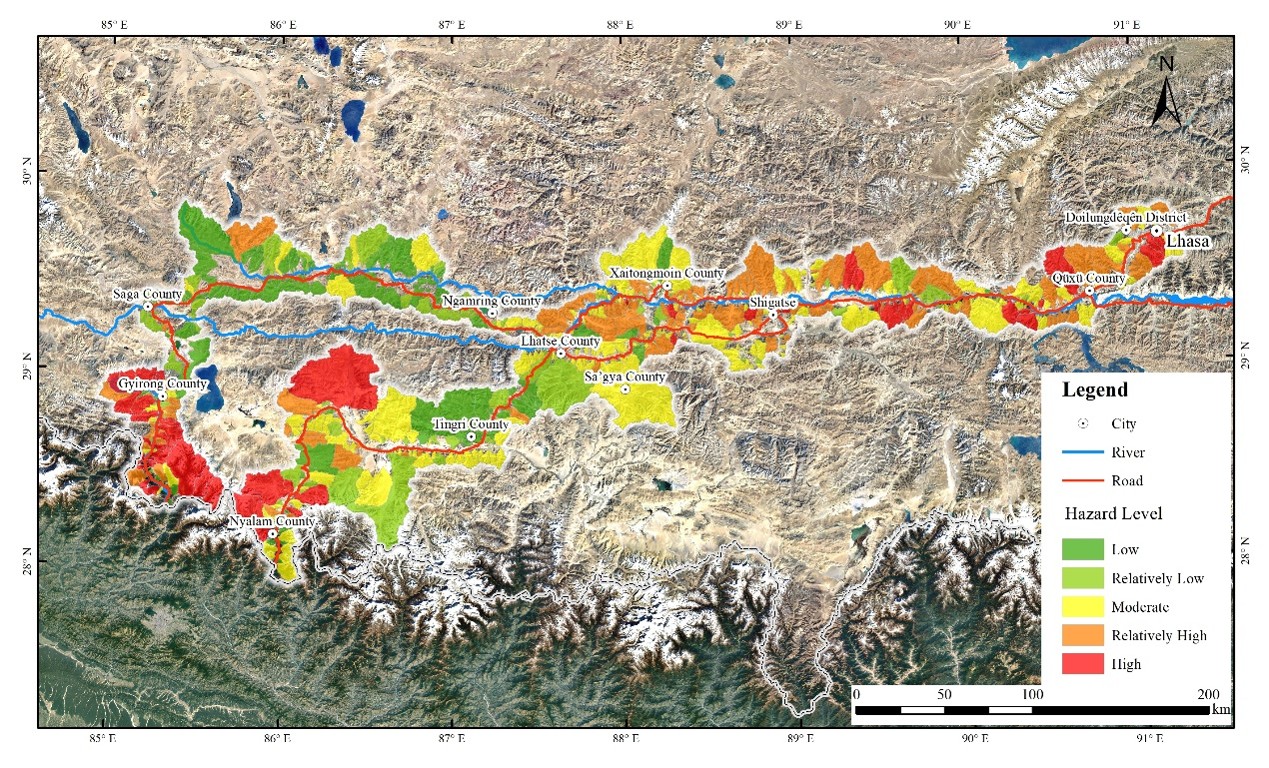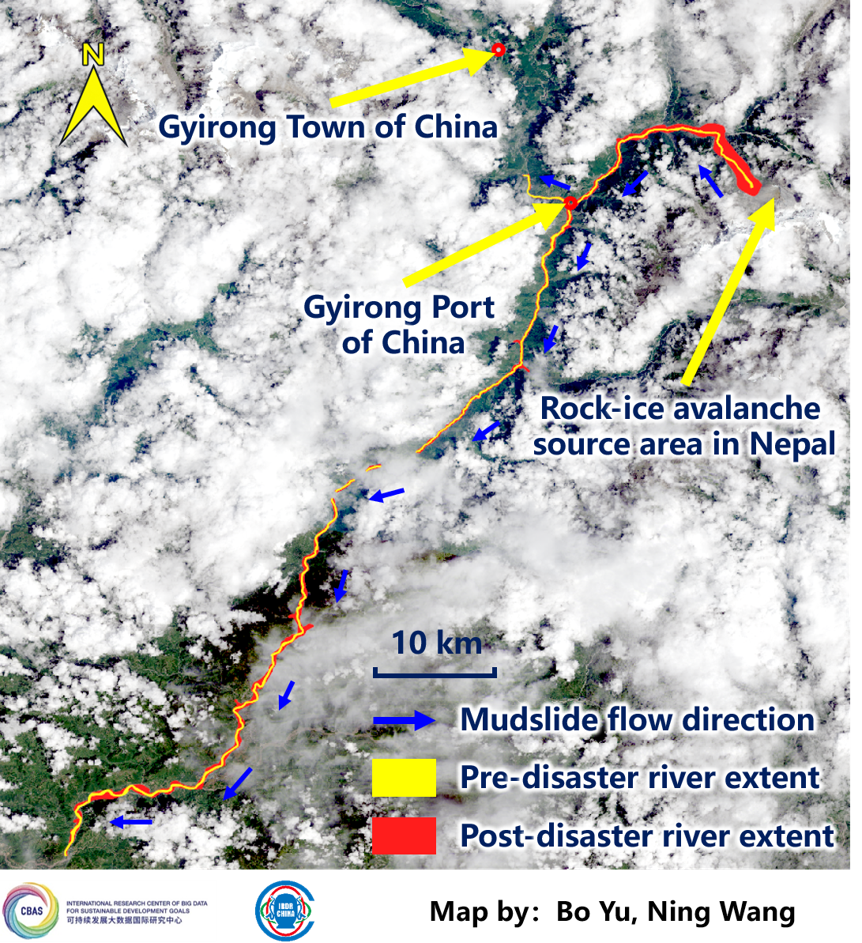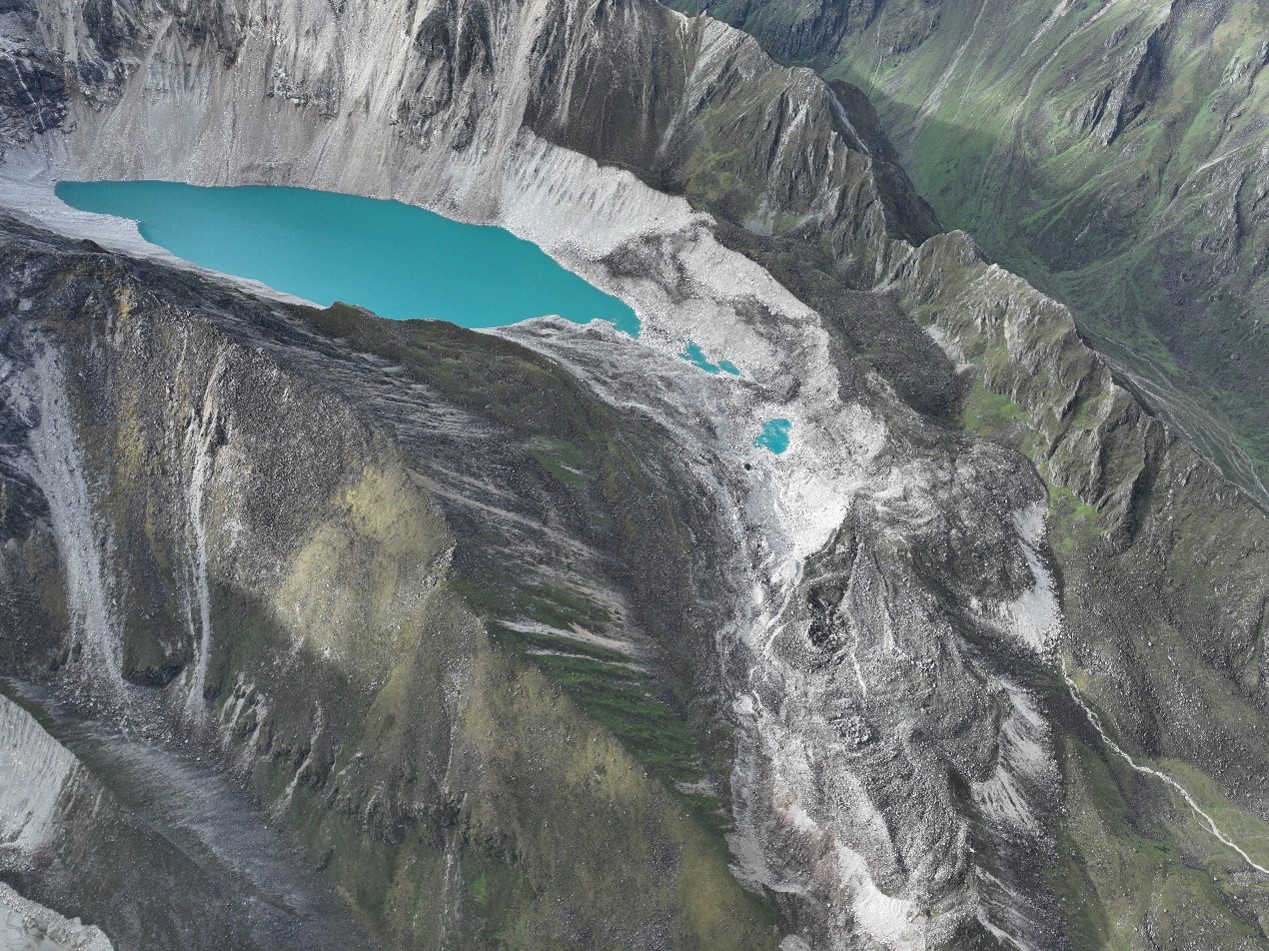
The retreat of Himalayan glaciers and the expansion of glacial lakes due to global warming have increased the occurrence of glacial lake outburst debris flow (GLODF), posing a serious threat to downstream communities. However, there are gaps in understanding the changes in GLODF occurrence driven by climate change, which challenges disaster management and cross-border cooperation in the Himalayas. Considering this issue, we present a novel framework integrating environmental evolution, a process-driven indicator system, and a hybrid machine learning model to predict Himalayan GLODF occurrence in the 21st century. Our findings indicate ongoing temperature (0.27–0.60 °C/10a) and precipitation (1.30–5.00 %/10a) increases under both SSP245 and SSP585 scenarios. China-Nepal border remains a hotspot for cross-border GLODF. By 2100, it is projected that the number of catchments with high or very high probability and potential transboundary threats will increase by 96–101 (approximately a 2-fold increase). Our framework offers valuable long-term insights into Himalayan GLODF occurrence trends in response to climate change.
Citation of this publication: Zou, Q., Zhou, B. and Chen, S.Y.(2026). Transboundary Threats from Glacial Lake Outburst Debris Flows in the Himalayas: Identification and Future Projections. IRDR Working Paper Series, 9 pages. DOI: 10.24948/2026.07