The United Nations Office for Disaster Risk Reduction is drafting a Words Into Action guide to create the enabling environment to promote beneficial cooperation among policy-makers, science/academia/technology communities and society to reduce risk. It believes incredible things can happen when these three groups work together in a healthy ecosystem.
UNDRR is seeking stories demonstrating successful and less-successful cases of these groups collaborating to reduce disaster risk. If you know of a story that might be instructive to others, please email the coordinating editor Jörgen Sparf a 150-word outline by February 15 at jorgen.sparf@miun.se. A selection of the submitted abstracts will be invited to write up the whole story later this spring.
Stories from all sectors (agriculture, health, planning, economy, transportation, education, etc.) will be welcomed, from all scales (neighbourhood, village, city, district, country, region, global), where at least two of Science/Policy/Society work together to reduce risk. This could include elements of communication and media, all-of-society approaches, complexity and uncertainty, and emerging technology. Some of the major themes will be related to Policy-making capacity, Inclusion, Trust, and Politicization, but we will be happy to have stories describing other themes.
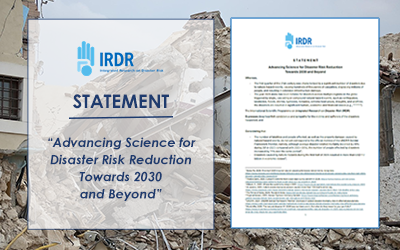
The concept note can be download for your reference.