The 2011 Global Assessment Report on Disaster Risk Reduction (GAR11) highlights the political and economic imperative to reduce disaster risks, and the benefits to be gained from doing so. Importantly, it offers guidance and suggestions to governments and nongovernmental actors alike on how they can, together, reduce disaster risks. Drawing on a large volume of new and enhanced data, it explores trends and patterns in disaster risk globally, regionally and nationally. In parallel, more than 130 governments are engaged in self-assessments of their progress in implementing the Hyogo Framework for Action (HFA), contributing to what is now the most complete global overview of national efforts to reduce disaster risk.
UNISDR (2011) Global Assessment Report on Disaster Risk Reduction
25 January 2013
Related News & Events
23 September 2026
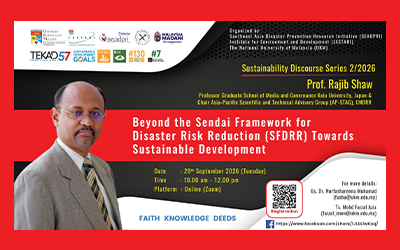
Join the IRDR-ICoE-SEADPRI UKM webinar on 29 September 2026 (10:00 am–12:00 pm Malaysia Time) with IRDR Fellow Prof. Rajib Shaw as he explores how the Sendai Framework's lessons can shape the next generation of DRR and embed "Resilience by Design" into sustainable development beyond 2030.
21 September 2026
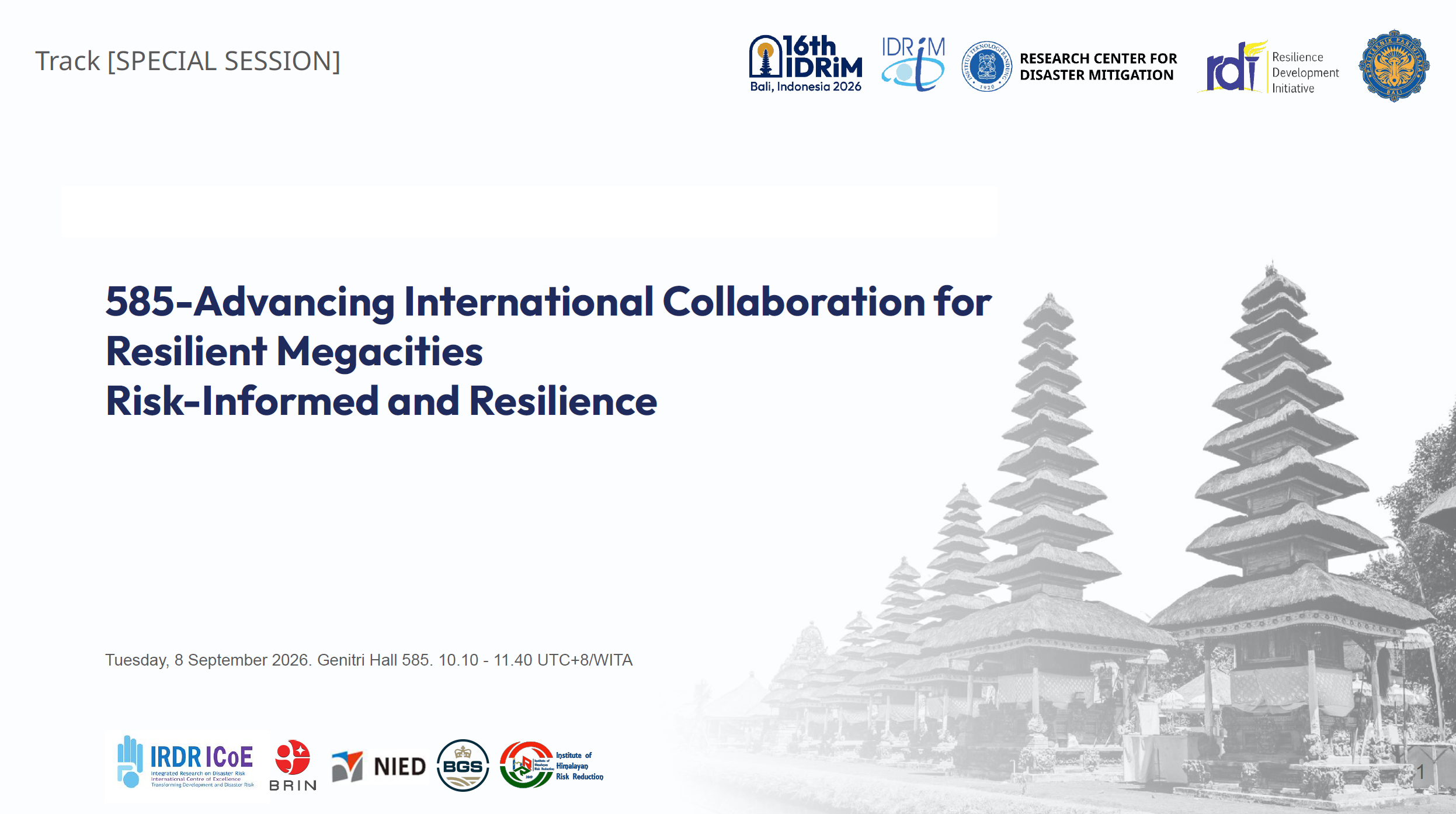
The IRDR Special Session at the recently held 16th IDRiM Conference 2026, “Advancing International Collaboration to Foster Integrated Research on Catastrophe Resilience in Megacities”, brought together leading researchers and institutions to address the growing disaster risk in the world's most populous urban centres.

IRDR Contributes to Global Discussions on Disaster-Related Statistics at the 6th Global Expert Forum
18 September 2026
IRDR's Executive Director, Prof. Saini Yang, participated in the recently held 6th Global Expert Forum for Producers and Users of Disaster related Statistics during which she introduced IRDR’s efforts in strengthening disaster risk knowledge.